1611 Forecasting
Election Day November 3, 2026
Senate and governor counts are races on the 2026 ballot, not the full chamber. House is every seat. 218 is a House majority.
Latest
Checking polls and early vote
Polls
Waiting for the poll table.
Early vote
Closest Senate races
Sorted by the modeled margin. Tap a row for the county or district breakdown.
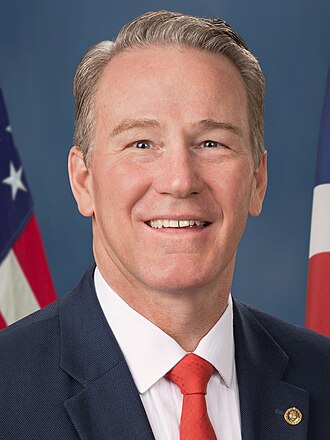 RJon Husted, ROhio · Senate specialJon Hustedvs Sherrod BrownR+0.453.1% to win
 DTroy Jackson, DMaine · SenateTroy Jacksonvs Susan CollinsD+0.756.0% to win
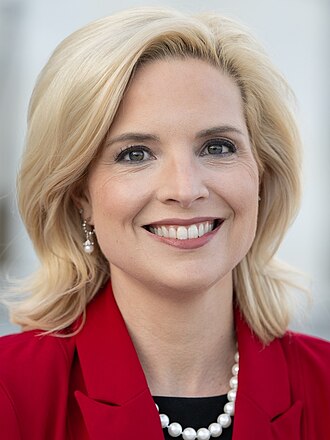 RAshley Hinson, RIowa · Senate · OpenAshley Hinsonvs Josh TurekR+1.159.5% to win
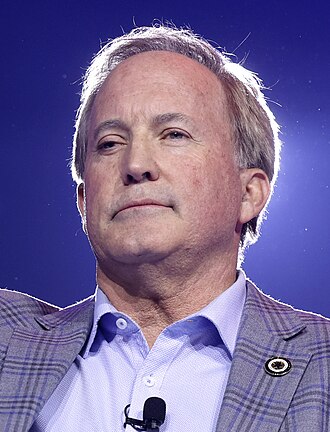 RKen Paxton, RTexas · Senate · OpenKen Paxtonvs James TalaricoR+1.965.3% to win
 RDan S. Sullivan, RAlaska · SenateDan S. Sullivanvs Mary PeltolaR+2.061.6% to win
 DAbdul El-Sayed, DMichigan · Senate · OpenAbdul El-Sayedvs Mike RogersD+2.667.2% to win
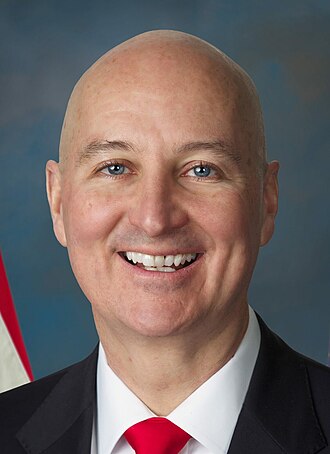 RPete Ricketts, RNebraska · SenatePete Rickettsvs Dan OsbornR+3.772.8% to win
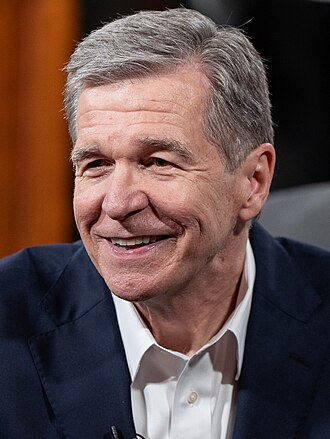 DRoy Cooper, DNorth Carolina · Senate · OpenRoy Coopervs Michael WhatleyD+4.776.5% to win
 RRoger Marshall, RKansas · SenateRoger Marshallvs Adam HamiltonR+6.277.3% to win
 DJon Ossoff, DGeorgia · SenateJon Ossoffvs Mike CollinsD+6.583.6% to win
All states
Methodology
The published result is the sum of the counties, or of the pieces of counties inside a district. A poll average is an input. It is not the result.
What is being forecast
Every 2026 governor, Senate, and U.S. House race. The forecast is dated October 7, 2026. Election Day is November 3, 2026. Each race is the general-election pair. A primary market, a primary poll, and a candidate who is not on the general-election ballot are not inputs.
National environment
The generic congressional ballot, October 5, 2026, is Democrats 50.8, Republicans 42.6, other 6.6. Wikipedia generic-ballot aggregate, October 5, 2026. Input to the national block (60%), not the county-sum result. Party identification is Pew at 55 percent and Gallup at 45 percent. Pew’s 2026 figure is Republican 43, Democratic 48. Gallup’s first half of 2026 is Republican 39, Democratic 49. The national block is 60 percent generic ballot and 40 percent party identification.
Only the share of that national swing the state has actually taken is transmitted. Elasticity is the state’s 2022 move relative to its 2020 presidential margin, divided by the same national move, then shrunk halfway toward 1. A state with its own public generic-ballot poll uses 65 percent of that local swing and 35 percent of the national swing. No state is given another state’s number.
History
Senate and governor history uses 2018, 2020, 2022, and 2024 for that office. Nothing earlier. If the office was on the ballot in 2022, the weights are 40 percent 2022, 35 percent 2024, 20 percent 2020, and 5 percent 2018. If it was not, 2022’s weight falls back to 2018: 40 percent 2018, 35 percent 2024, 20 percent 2020, and 5 percent 2022. A missing year is filled with the 2020 result for the same office. Another office is not used.
A 2024 county map is not copied forward. Each county starts at the last comparable result and is moved by the midterm electorate and the polls. The county’s presidential lean places a statewide result inside the county. Rural and presidential-only counties move farther than the metros. The counties are then added up. That sum is the result.
Senate
Weights before a prediction market. They sum to 100.
| Polling | 21.5 |
| State partisan lean | 17.7 |
| Presidential popularity | 11.8 |
| Candidate favorability | 10.8 |
| History | 7.8 |
| Candidate | 5.9 |
| National environment | 5.9 |
| Electorate | 4.9 |
| State environment | 3.9 |
| Turnout | 2.9 |
| Demographics | 2.9 |
| Finance | 2.0 |
| Issues | 2.0 |
Partisan lean is the state’s 2024 presidential margin. It is not shrunk toward the polling term. If the incumbent’s last margin and that presidential margin differ by more than 8 points, half of the difference is kept as a candidate term after shrinkage. It does not override three agreeing public polls. It does stop one tie poll from erasing a large personal margin.
An uncontroversial incumbent in a state that keeps incumbents receives 1.5 points after shrinkage. A state that has not kept its last two incumbents receives less. An appointed incumbent who has not won the seat receives half. A scandal-defined incumbent receives zero.
Governor
The same structure, with a larger candidate term and a larger state environment.
| Polling | 21.5 |
| State partisan lean | 15.7 |
| Presidential popularity | 11.8 |
| Candidate favorability | 10.8 |
| History | 7.9 |
| Candidate | 7.8 |
| Electorate | 4.9 |
| State environment | 4.9 |
| National environment | 4.9 |
| Turnout | 2.9 |
| Demographics | 2.9 |
| Finance | 2.0 |
| Issues | 2.0 |
An elected governor receives 3 points. A sourced job-approval net of +10 or better raises that to 4.5. A net of +20 or better raises it to 6. Underwater approval stays at 1.5. No sourced rating stays at 3. An appointed governor who has not won the office receives half. The approval figures are Morning Consult, April 2026, except where a later state poll is the sourced rating.
House
House is not a smaller version of the Senate model. A statewide Senate or governor poll is not a district poll. With no public likely-voter poll of the district, the race is fundamentals only and the interval is wider. One partisan internal is not a polling term.
| District baseline | 26.8 |
| Incumbent overperformance | 15.3 |
| District polling | 13.2 |
| Statewide environment | 11.5 |
| Candidate quality | 7.7 |
| District partisan lean | 7.9 |
| Presidential popularity | 7.9 |
| Favorability | 5.9 |
| Fundraising | 3.8 |
The baseline is the 2024 presidential vote inside the current district lines. Where a county is split, the pieces are weighted by the votes cast in each district, not equally. If that whole-county average disagrees with the Cook PVI on these lines by more than 3 points, the presidential vote on the current lines is the PVI. County signs are not flipped. The 2024 House result is used when it was on these lines. A state on new 2026 lines does not carry a margin from the old map. A state still on the previous map keeps those lines.
A member who won the seat in 2024 keeps half of their overperformance against the presidential number. An open seat keeps none. A primary opponent is not the general-election baseline. A result may not move more than halfway from the district’s last presidential margin to a thin poll or to the statewide environment. A seat the same party carried by 10 or more stays on that side of the floor. A district inside 3 points that voted for the same party by 15 or more is not left as a toss-up on a thin poll.
Polls
Public likely-voter polls are the polling term. A registered-voter poll is counted at 90 percent. Recency has a 16-day half-life. A sample of size n is weighted n divided by n plus 350. An internal poll, or a poll sponsored by one party, is weighted at 20 percent of a public poll, and only when a public poll is also in the race. If the file is internals only, those polls are dropped and the race is rated from the baseline and the generic ballot. A poll more than 8 points from the median of the others is cut in half.
Named support does not move. A named third-party vote stays third-party. Only an undecided line is split, and only once. If a poll has no undecided line, it is left alone. The split is that state or district’s 2024 two-party share, moved halfway to 50 and capped at 60/40. A place at 57 percent Republican sends the undecided 53.5 / 46.5 Republican. This is not run on the county layer and not run in the history block.
With a poll, the history blocks move toward it. The move is 35 percent in the ordinary case, 20 percent when the state missed in the same direction in both of the last two sourced cycles, and 60 percent when the office history and the presidential lean differ by more than 12 points. Partisan lean, presidential popularity, and favorability are not shrunk. If the state’s 2024 presidential margin was more than 10 points, a thin poll may not move a Senate or governor result more than halfway from the office baseline to the poll. One poll does not rewrite the state. Three public polls from different pollsters, with none an outlier, lift that floor.
Presidential popularity and favorability
Presidential approval is the national average of October 7, 2026: 37 percent approve, 60 percent disapprove. Four-tenths of that net is a margin, then scaled by the place’s partisan lean, so an unpopular president costs more in a Democratic state and less in a state that voted for the president by a wide margin. It is its own term. It is not folded into the generic ballot.
Favorability is the incumbent’s record minus the partisan lean. Thirty-five percent of that gap is kept, capped at 5 points. An open seat is zero. An appointed incumbent is halved.
Prediction markets
A qualifying market is 5 percent of every governor, Senate, and House score. The other weights are scaled by 0.95 so the total stays 100. The 5 points are not taken out of polling alone. The price is the mid on Polymarket and Kalshi. If both exist, they are averaged. A book under $10,000 is ignored. A market that names a different pair, and every primary market, is ignored.
The price is a win probability, not a vote share. A price of 50 is a tie. Each point above 50 is 0.35 margin points, capped at 12, so 65 becomes about 5 and 90 becomes 12. That margin is then shrunk 40 percent toward the model’s pre-market margin. The market enters once. It does not also nudge the polling term. If the market and the polls disagree by more than 15 points of win probability, the market weight is cut in half and the interval is wider.
Turnout and early vote
Turnout is built from counties. Mail, in-person early, and Election Day shares come from the last comparable election, not from 2020 when that year was a mail spike. A county is weighted by its share of the state vote, its partisan lean, and its usual turnout. Small counties shrink toward the state mix. Verified 2026 early vote is a check, not a margin: returned mail plus in-person ballots, and only where those add to the reported number of ballots cast. Applications and ballots that were only sent are not counted. A day-one pace is not the early-vote period.